Faxing medical records in 2026. Still happening. Still breaking cases.
This isn't a rant about outdated technology for its own sake. It's about what fax-dependent workflows actually cost the people on the personal injury care chain — the chiropractor whose treatment notes disappear into a queue, the physical therapist whose discharge summary never surfaces in the file, the PI attorney who spends three weeks chasing a provider's front desk, and the adjuster who can't close a claim because the documentation is incomplete.
The problem isn't that fax machines exist. It's that the personal injury medical records workflow — one of the most documentation-intensive processes in healthcare, is still being held together with technology designed for 1964.
What the PI Care Chain Actually Looks Like on Paper vs. Reality
In theory, a personal injury case has a clean handoff sequence: patient is injured, treated by a chiropractor or orthopedist, referred to additional specialists, records compiled by the attorney, submitted to the insurer, claim resolved.
In practice, every handoff in that chain is a point of failure.
The chiropractor's notes are faxed to the attorney. Whether they arrived is anyone's guess until someone calls to check. The physical therapist's discharge summary was sent three weeks ago — to the wrong fax number. The orthopedic consultant's report is sitting in a stack of incoming faxes that the front desk will process when they have time. The attorney's paralegal has a manila folder with seventeen pages of notes, four of which are duplicates, and no reliable way to confirm what's missing.
The adjuster is waiting on the full treatment timeline before evaluating. The PI attorney is waiting on the medical records before they can build the timeline. The providers are waiting to hear if their records were received. The patient is waiting for all of it.
Meanwhile, the case clock is running.
This isn't a failure of effort. Everyone on that chain is working. The problem is structural: there's no shared system. Every professional is operating out of their own silo, and the records — the single most important asset in a PI case — are being moved between silos by fax.
Where the Fax Queue Actually Breaks Things
Let's be specific about the failure modes, because "faxing is slow" undersells the actual damage.
Confirmation is manual. A faxed record has no reliable status tracking. To know if it arrived, someone has to call. That call generates a voicemail. That voicemail generates a callback. That callback happens when someone has a free minute. In busy practices, that can take days. Version control doesn't exist. If an attorney requests updated records after additional treatment, there's no way to know which version of a document is current without reading every date stamp and hoping nothing was re-faxed on top of itself. Source attribution gets lost. When records land in a physical stack or a generic inbox, provenance is guesswork. Which records came from the chiropractor? Which are from the orthopedist? Which are duplicates? Someone has to sort it manually. The provider is the bottleneck. PI attorneys and adjusters are entirely dependent on the provider's front desk to locate, print, fax, and confirm delivery of records — typically as an unscheduled interruption to a full clinical day. The incentive to prioritize that work is low. The friction is high. Missing records don't surface until they're critical. The gap in documentation often isn't discovered until the attorney is building the timeline for demand or the adjuster is evaluating the claim — at which point the delay cascades into the case itself.None of these are edge cases. They're the ordinary operating conditions of the personal injury medical records workflow right now.
What a Digital Record Request Workflow Actually Changes
The structural fix isn't telling providers to check their fax queue more often. It's replacing fax in healthcare workflows entirely.
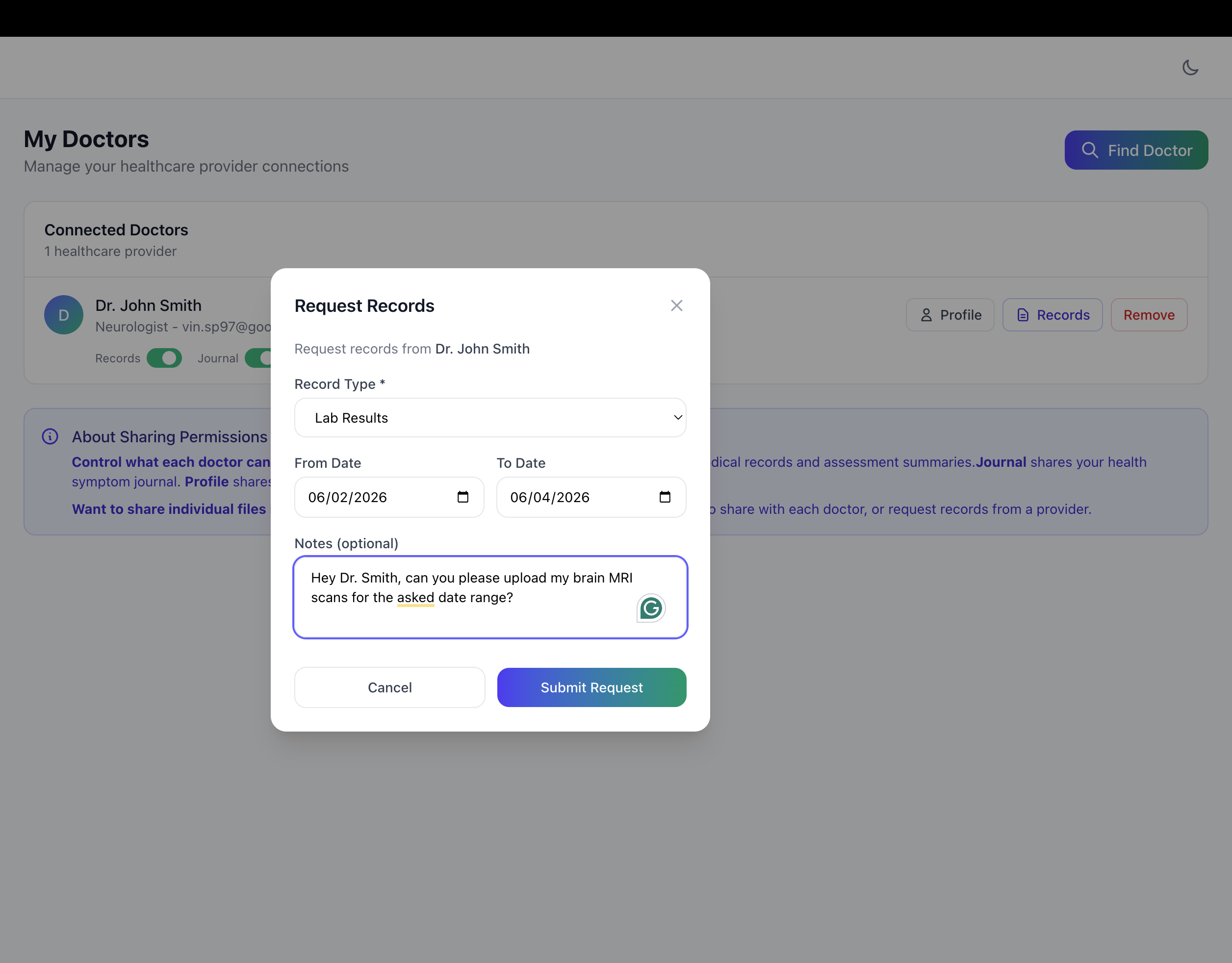
PatientPreVue's Digital Record Requests replace the fax-and-hope cycle with a three-step tracked flow: Requested → Sent to Provider → Fulfilled. Every party who needs to know the status can see it. When the provider fulfills the request, the files land directly in the patient's secure records library — tagged by source, timestamped, and ready to share with the next professional in the chain.
Here's what that changes at each handoff:
For the attorney: No more chasing. When you send a digital medical record request through PatientPreVue, you can see its status in real time. You know when it was received, when the provider acted on it, and when the records are available. The manila folder becomes a structured digital library. The three-week chase becomes a trackable workflow. For the provider: No more being the bottleneck. The digital request arrives clearly — with the record type, date range, and any specific notes from the requesting party. Fulfillment is a file upload, not a print-fax-confirm sequence. The provider completes the request on their terms, not on someone else's call schedule. For the adjuster: Documentation completeness is visible. When records are in a shared digital library with source attribution and timestamps, gaps are identifiable before they become claim delays. The adjuster can see what's there and what isn't — without requesting another status update. For the patient: Their records are in one place, organized by source, accessible and shareable. They're not the messenger between their chiropractor and their attorney. The platform carries that.Smart Search: When the Records Exist But You Can't Find the Answers
There's a second problem that digital storage alone doesn't solve: retrieval.
A PI file can contain hundreds of pages across multiple providers, intake assessments, treatment notes, imaging reports, discharge summaries, billing records, independent medical exam findings. Even when those records are digitized, finding a specific diagnosis date, a treatment frequency detail, or a reference to a prior injury requires reading through all of it.
PatientPreVue's AI Records Assistant (Smart Search) lets attorneys, and any connected professional, query across the full document set in plain language. "When did the treating chiropractor first document radiculopathy?" "How many physical therapy sessions were completed before discharge?" "Is there any reference to a prior lumbar injury?"
The AI searches across document content, not filenames, and returns cited answers with the source document identified. It doesn't interpret or draw conclusions. It finds the passage, shows you where it came from, and lets you do your job faster.
For a PI attorney managing multiple files simultaneously, this is not a convenience feature. It's hours saved per file.
One Patient. One Hub. Every Professional.
The deeper issue with the fax-dependent PI workflow is that it treats each professional relationship as a separate bilateral connection. Chiropractor ↔ attorney. Attorney ↔ adjuster. Adjuster ↔ provider. Each connection is its own silo with its own communication method and its own documentation gaps.
PatientPreVue is built on a different premise: one patient at the center, with every professional in the case connected to the same hub.
The chiropractor's treatment notes, the orthopedist's consultation report, the PT's discharge summary — all in one records library, with the patient controlling who has access and to what. When the attorney connects to the patient's hub, they see what the patient has chosen to share. When the adjuster needs documentation, there's a structured digital path for requesting and receiving it. Secure messaging between professionals — across disciplines — replaces the game of voicemail and fax confirmation.
This isn't a productivity tip layered on top of a broken workflow. It's a structural change to how the PI care chain operates around a shared patient record.
Patients can explore how this works for them at PatientPreVue for patients, including how to organize their own records and share them with providers or legal representatives on their terms.
The Case for Acting on This Now
Personal injury practices — chiropractic, orthopedic, PT — live on documentation quality. Attorneys win or settle cases on the completeness of the medical record. Adjusters make decisions based on what's in the file. Every week a fax spends in a queue is a week the case isn't moving.
The firms and practices transitioning to digital record request workflows aren't doing it because faxing is embarrassing. They're doing it because documentation completeness and retrieval speed have direct consequences for case outcomes and professional relationships.
A chiropractor whose chiropractic records for personal injury cases consistently arrive on time, organized and complete, becomes the provider PI attorneys want to refer to. An attorney who can retrieve specific treatment details in seconds — rather than hours — has a structural advantage in case preparation. An adjuster who receives organized, source-attributed documentation can evaluate claims with less back-and-forth.
That's the value of getting this part of the workflow right. Not as a technology upgrade, as a professional differentiator.
What to Do Next
PatientPreVue is built for the PI care chain: chiropractors, orthopedists, physical therapists, PI attorneys, and adjusters — all connected around the patient, with digital record requests, a shared records library, Smart Search, and secure cross-discipline messaging.
If your practice or firm is still coordinating records by fax, explore PatientPreVue for professionals and see what the workflow looks like when the bottlenecks are structural, not just slow.
For more on how connected care documentation works across the full care team, visit the PatientPreVue blog.